Home / 部落格列表 / Shopping Guide / Ximending Red House Guide: Taiwanese Design, Shopping, Food & Bars
文章分類
Ximending Red House Guide: Taiwanese Design, Shopping, Food & Bars
2026-08-21
If you come to Ximending and only snap a photo outside the Red House before leaving, you are missing quite a bit. What makes the Red House so appealing is not just its historic red-brick architecture, but the way it brings together the history of western Taipei, creative shops, Taiwanese designer fashion, weekend markets, and nightlife in one walkable district.
This guide is organized around a route travelers can realistically walk. It covers how to explore the Red House, which shops are worth stopping at, where to look for souvenirs, and why TAIWANIZE is one of the clothing stores worth visiting in Ximending. If you want to extend the day, you can continue to Bopiliao Historic Block and Dadaocheng for a heritage route through western Taipei.
Quick overview
Allow about 1.5 to 3 hours for the Red House. Add the South Square bars and dinner in Ximending, and it can easily become a half-day itinerary.
The main shopping areas include Red House Select Shop, the 16 Workshops, the weekend creative market, and nearby fashion brands—good places to browse Taiwanese creative goods, souvenirs, and designer clothing.
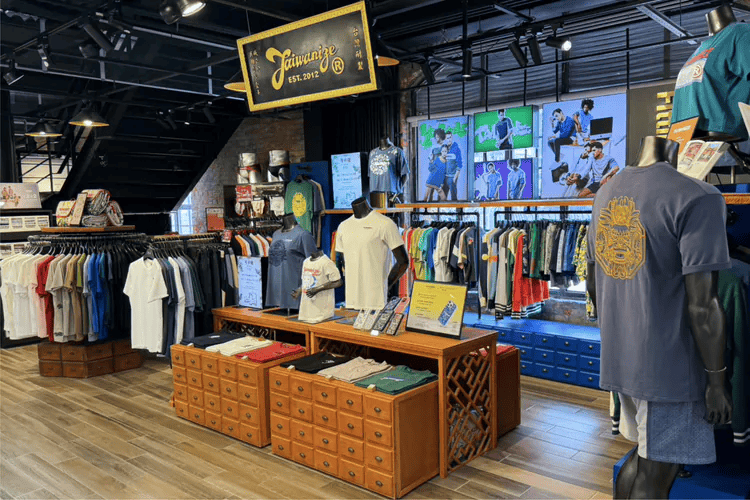
The TAIWANIZE Red House store is located in the 16 Workshops. The brand turns Taiwanese culture and everyday symbols into T-shirts, apparel, underwear, and accessories. It is a Taiwanese designer fashion brand worth noticing here, whether you want something for everyday wear or a distinctly Taiwanese gift you can keep wearing after the trip.
At night, add the bars around Red House South Square: explore heritage and creative shops by day, then see a different side of Ximending after dark.
For a western Taipei heritage day, combine the Red House, Bopiliao, the Longshan Temple area, and Dihua Street in Dadaocheng. Use the MRT or a taxi between sections instead of trying to walk the entire route.
The Red House is more than a photo stop: creative shopping by day, drinks at night
The Red House is a rare mixed-use attraction in western Taipei. Behind its century-old historic architecture are creative shops, exhibition and performance spaces, a weekend market, and a nightlife district. For travelers, it is not a place you simply “finish seeing”; it works especially well as the starting point for a walk through Ximending.
A century-old red-brick landmark in one of Ximending’s most layered districts
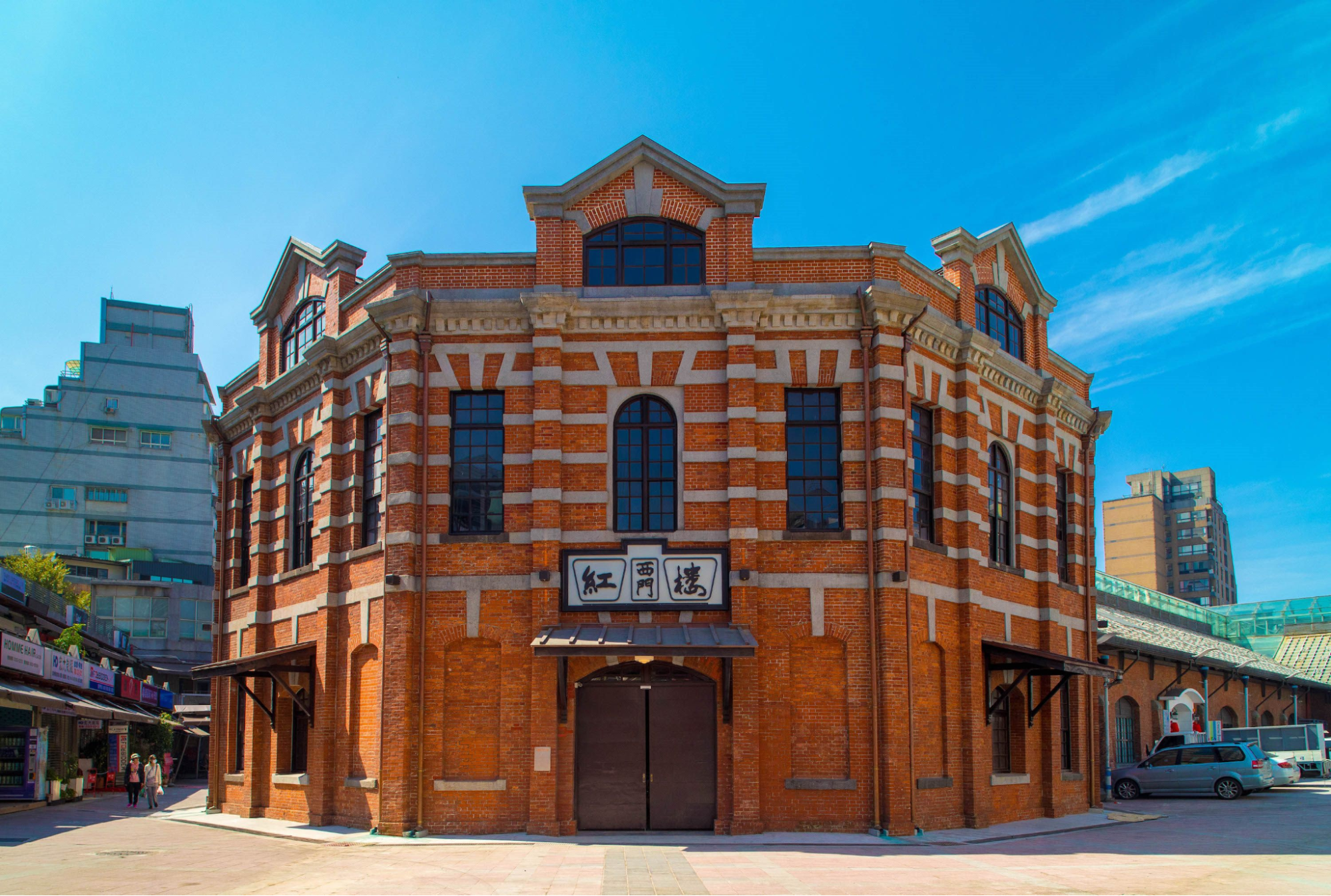
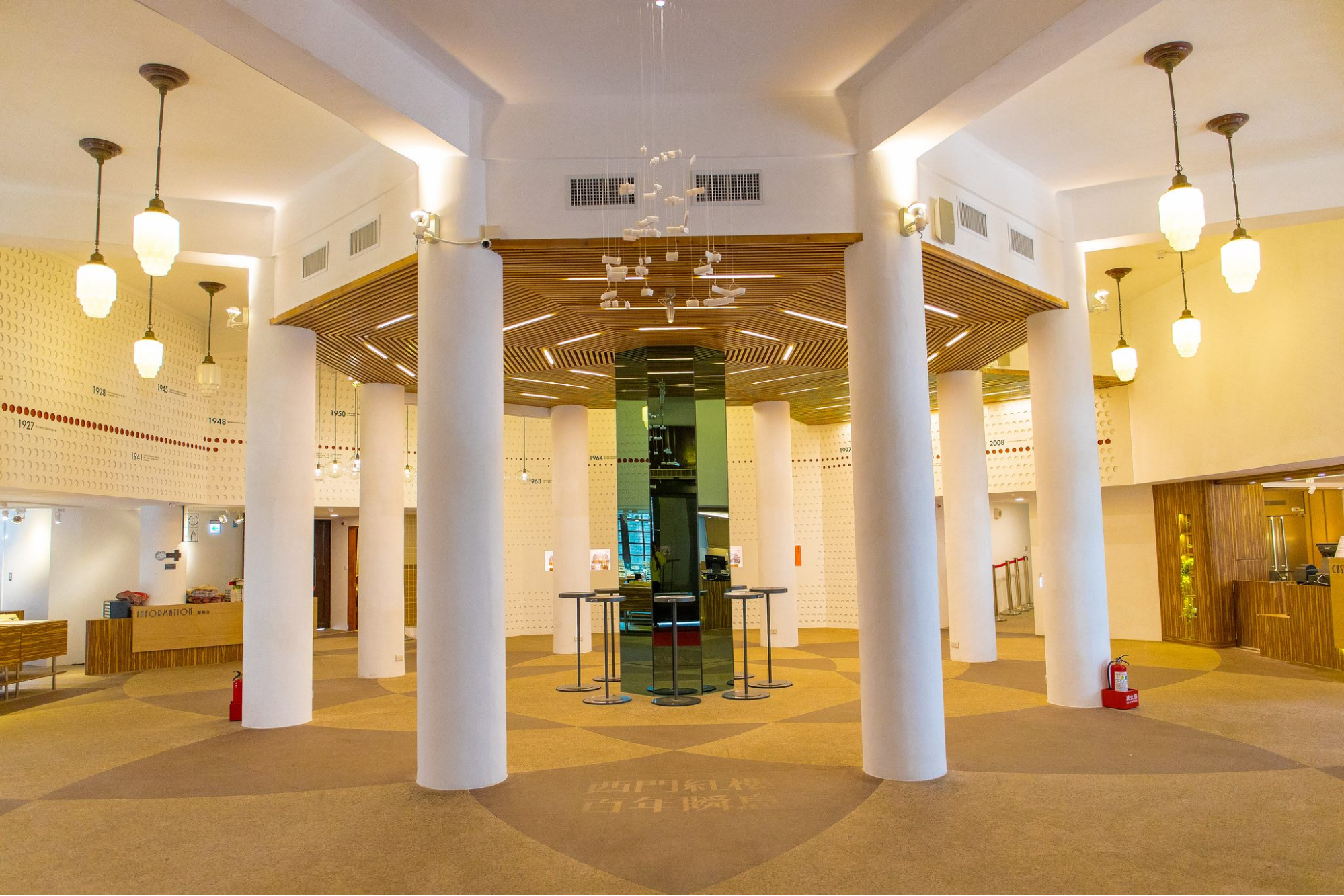
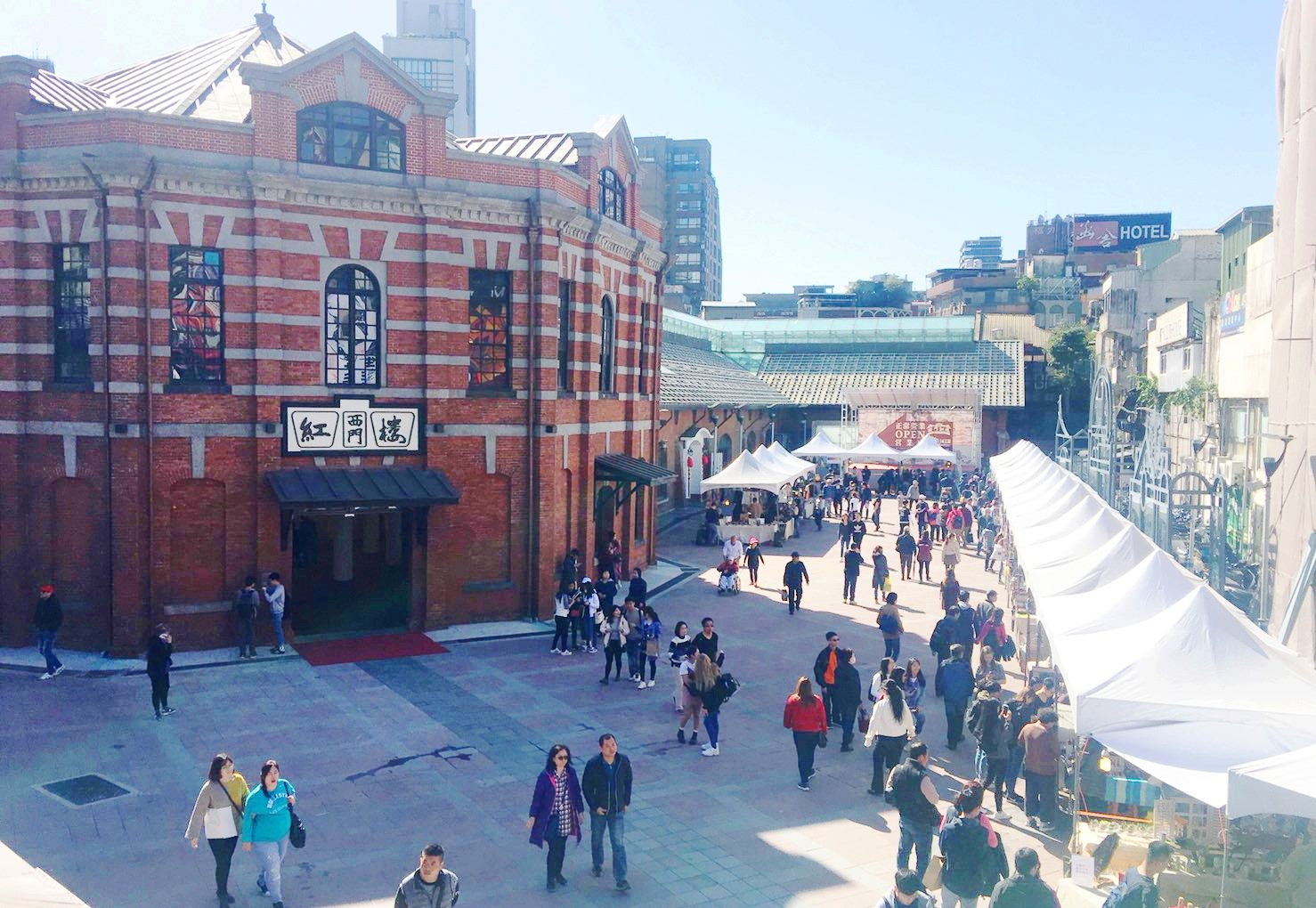
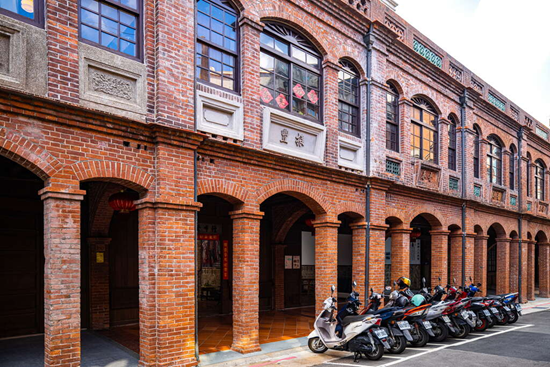
The appeal of the Red House is not only the red-brick monument itself, but also the contrast with the youthful, lively streets of Ximending around it. Look at the architecture first, then step inside for exhibitions, select shops, and the 16 Workshops. That gives you a much better sense of the old-and-new layers here than simply taking a photo outside. We will return to the detailed history later in this guide.
How should you explore the Octagon Building, Cruciform Building, 16 Workshops, and South Square?
The Red House is not a single building. It is an area made up of the Octagon Building, Cruciform Building, North and South Squares, and the surrounding commercial district. According to the Taipei City cultural authorities, the Red House Tea Shop, Red House Select Shop, creative market, and 16 Workshops are all part of today’s creative experience.
Rather than looking only at the exterior, break the Red House into four stops: exterior photos, indoor exhibitions and shopping, the 16 Workshops, and the South Square bars. This creates a better rhythm and makes it less likely that you will miss the areas that are actually worth shopping and spending time in.
Why is the Red House a good first stop on a Taipei trip?
The Red House is at No. 10, Chengdu Road, Wanhua District, Taipei. Taiwan tourism information lists Ximen MRT Station, YouBike stations, parking, and visitor services nearby. For first-time visitors to Taipei, it is much easier to fit into an itinerary than many outlying attractions, and it connects directly to the Ximending shopping district.
How to explore the Red House: recommended route and time needed
The smoothest route is to start with the architecture, continue into the creative shops, browse fashion next, and save the South Square or Ximending dining scene for the evening. This keeps you from backtracking and gives the Red House a different character by day and by night.
Ximen MRT Station Exit 6: about a 3–5 minute walk
Unless you specifically need to drive, taking the MRT to Ximen Station is easier. Based on visitor information and the actual location, it is about a 3–5 minute walk from Exit 6 to the Red House, and the route is straightforward even for international visitors. Ximending gets crowded on holidays, and driving can mean spending more time looking for parking than exploring.
Recommended route: Red House exterior, Red House Select Shop, 16 Workshops, TAIWANIZE, South Square bars
If you only have two hours, follow this order:
Start with photos around the Red House and the square, using the contrast between the red-brick walls and the Ximending streets.
Go into the Red House Select Shop for Taiwanese design products, creative goods, and souvenirs.
Continue to the 16 Workshops and take your time with handmade goods, illustration, accessories, and small design brands.
Stop by the TAIWANIZE Red House store and try on clothing inspired by Taiwanese culture.
Stay into the evening and head to the Red House South Square bars or restaurants in Ximending.
Weekdays, weekends, and evenings offer different experiences
Time
Weekday afternoon
Best for
Photos, shopping, and exhibitions at an easy pace
Things to know
Fewer crowds; the market may not be running
Time
Weekend daytime
Best for
Creative market and design shopping
Things to know
Busier, but the district feels most lively
Time
Friday and Saturday evenings
Best for
South Square bars and Ximending nightlife
Things to know
Good for drinks with friends; not ideal for a rushed itinerary
Red House history: from Shinkichō Market to a Taipei creative hub
Three words summarize the history of the Red House: market, theater, and creativity. Those three roles explain why it is not simply a preserved monument today, but a cultural district that continues to be used and reinvented.
Completed in 1908: Taiwan’s first government-built public market
According to the Taipei City cultural authorities, the Red House was built in 1908 and initially served as a public market, later taking on roles as a market, cinema, and theater. That is why the building is worth seeing for more than its facade: it also reflects the evolution of commerce and entertainment in Ximending.Source: Taipei City Department of Cultural Affairs — Red House introduction
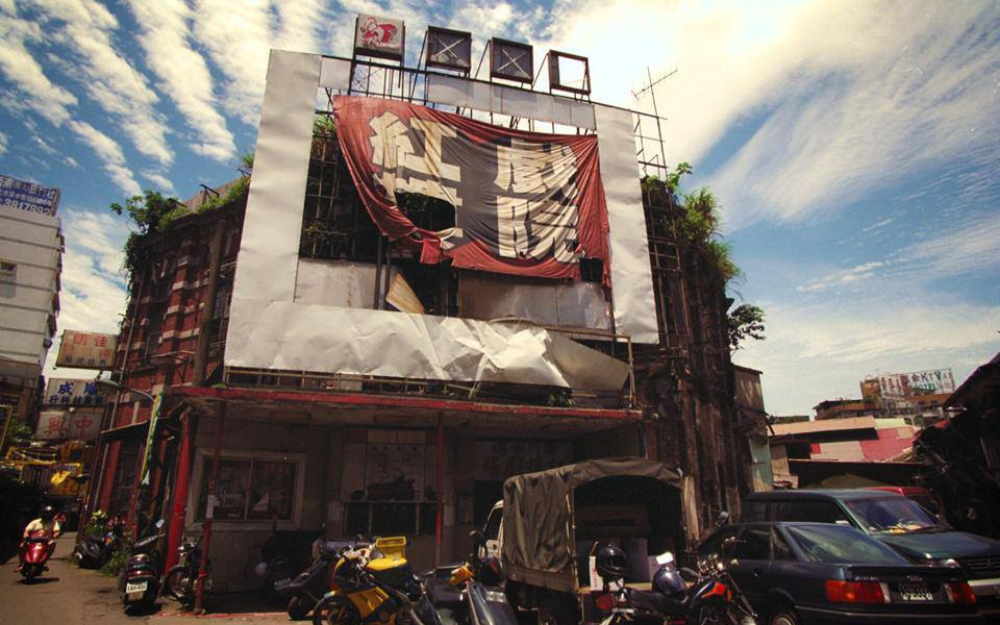
From market and theater to cinema and today’s creative performance space
Taiwan tourism information notes that the Red House consists of the Octagon Building and Cruciform Building and has served as a market, storytelling venue, cinema, and theater. Since 2007, the Taipei City Government’s Department of Cultural Affairs has commissioned the Taipei Culture Foundation to operate and manage the site, gradually developing it into a creative and arts hub.
Octagon and Cruciform Buildings: architectural details worth seeing
The most iconic image of the Red House is its Octagon Building and red-brick architecture. Taiwan tourism information explains that the octagonal form evokes the idea of “gathering from all eight directions,” while the Cruciform Building forms the main mass of the complex. Put this section at the start of your visit: see the architecture first, then enter the shops and exhibition areas for a more layered experience than going straight to shopping.
What is happening at the Red House now? Exhibitions, markets, and guided visits
Red House programming changes with exhibitions, workshops, creative markets, and seasonal events. Before you go, check the official “Latest Events” page rather than relying on screenshots from old articles or reposted social-media information.Source: Red House Latest Events page
Weekend creative market: the best time to browse independent design goods
According to Taipei City cultural information, the Red House creative market continues to take place on Saturdays and Sundays in North Square and remains one of the site’s most popular activities. If you want handmade goods, illustration, accessories, or Taiwanese design items, weekends offer much more to browse than weekdays.
Guided tours and workshops: how to go deeper into Red House history
The Red House website includes links for group tour reservations and creative-market vendor applications. If you are visiting with international friends, a company group, or a school, arranging a tour in advance can be more useful than reading display panels on your own. Independent travelers can check the event page first to see whether workshops or seasonal programs are running that week.
What to explore around the Red House: 16 Workshops, local snacks, and neighborhood restaurants
To make your Red House visit more complete, think of the surrounding area as three routes: start with the 16 Workshops and Taiwanese design, continue to the South Square bars, then add Neijiang Street, Wannian Commercial Building, and old-school Wanhua food for dinner or a late-night meal. The list below follows the Google Maps locations provided for this guide. Opening hours, queues, and days off can change, so check Google Maps and each business’s latest notice before you go.
Red House 16 Workshops | Browse many styles of Taiwanese design in one stop
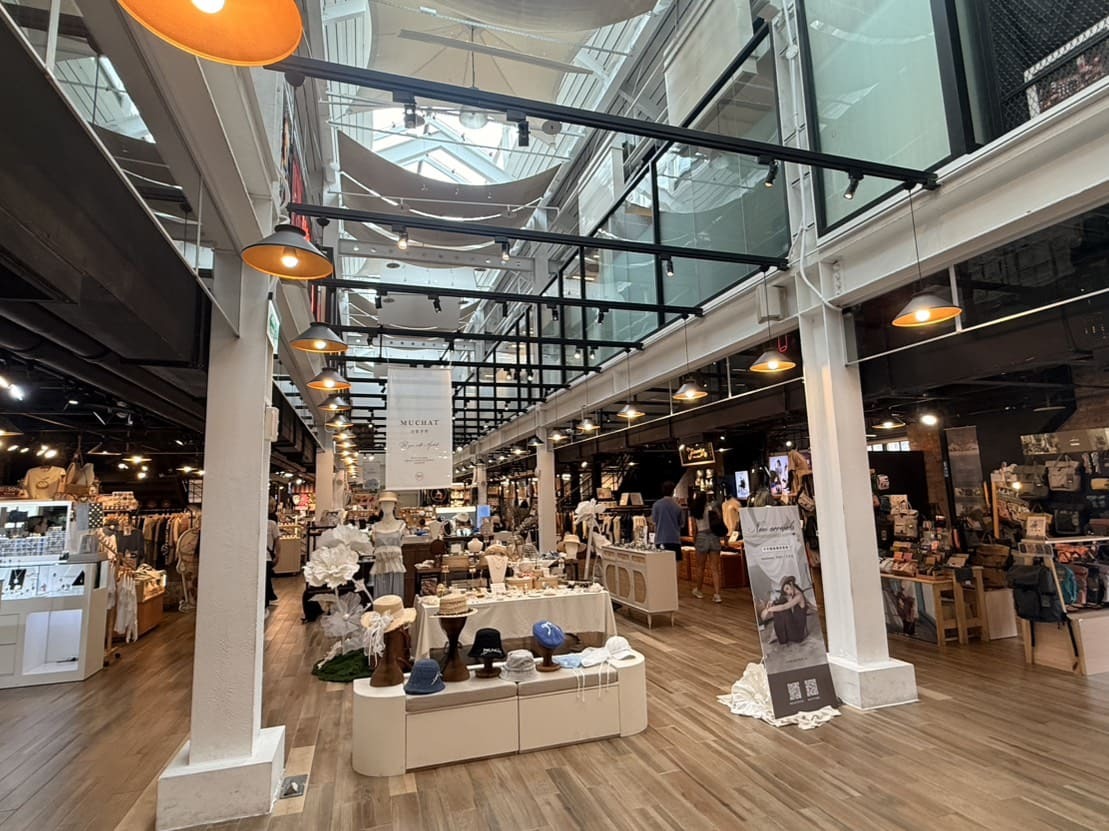
The 16 Workshops are a good first stop in the Red House itinerary. Rather than a single type of creative shop, they form a small Taiwanese design cluster selected through a Taipei City cultural program, bringing together apparel, embroidery, Indigenous cultural design, and lifestyle goods. Each brand works with Taiwanese elements differently: some begin with contemporary clothing, some reinterpret traditional dress, while others develop products from Indigenous culture, natural landscapes, or everyday symbols. It is more rewarding to browse slowly than to treat the area as just a souvenir zone.
TAIWANIZE began at the Red House creative market and turns Taiwanese culture and everyday imagery into T-shirts, jackets, underwear, and accessories;Lonely Planet’s globally known Red House guidealso mentions the TAIWANIZE clothing brand. If you want clothing with a clear Taiwanese cultural identity that still fits into everyday outfits after your trip, this is a good place to start.
Source: TAIWANIZE official website
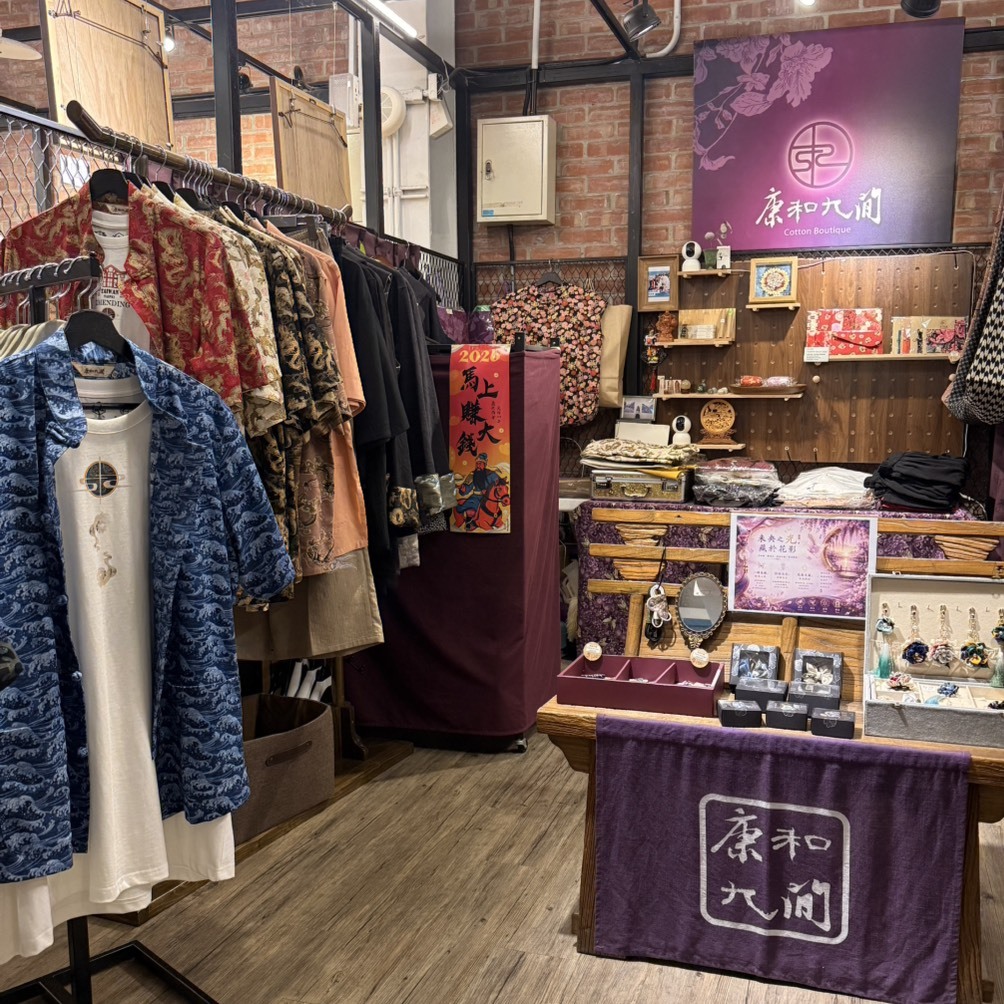
Kanghe Jiujian Jinyifang (康和九間錦衣坊) is on the second floor of the 16 Workshops. Starting from traditional Chinese clothing vocabulary, the brand reshapes elements such as Tang-style garments and tea-wear into silhouettes that are easier to wear today. It emphasizes streamlined cuts, small-batch production, and an Eastern aesthetic, making it a good fit for people who like traditional references but want them to work in everyday outfits.
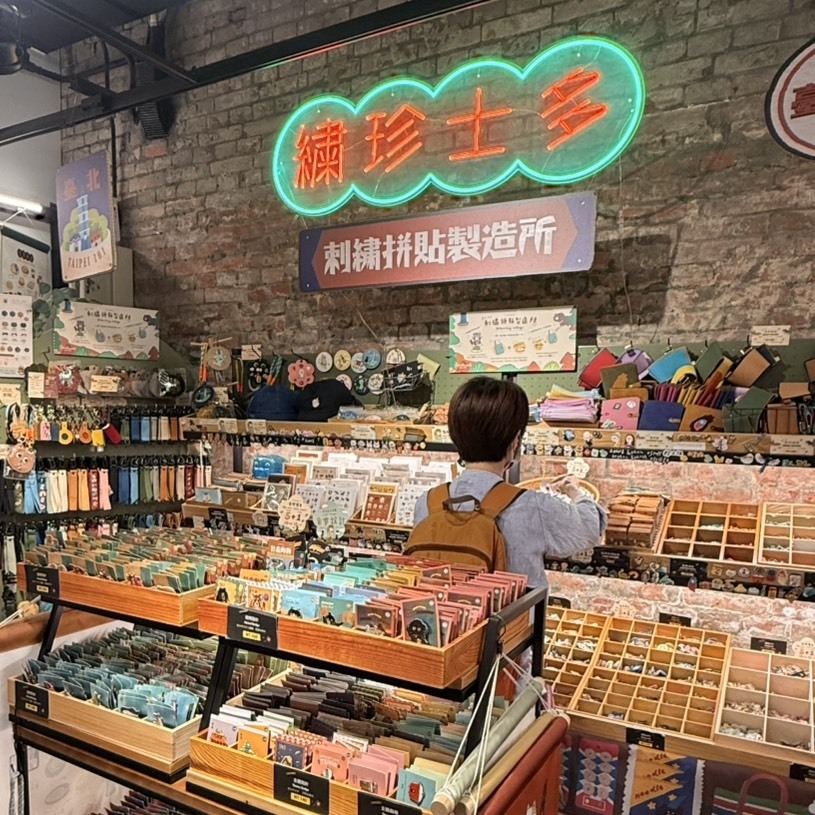
Littdlework 繡珍森活 (Littdle Store.繡珍士多) is on the first floor of the Red House. The brand turns bubble tea, Tatung rice cookers, xiaolongbao, animals, plants, and everyday Taiwanese scenes into small embroidered patches, pins, and charms. You can choose from different Taiwanese motifs and combine them into your own item, which suits travelers who enjoy customizing small design goods while taking home imagery from everyday Taiwan.
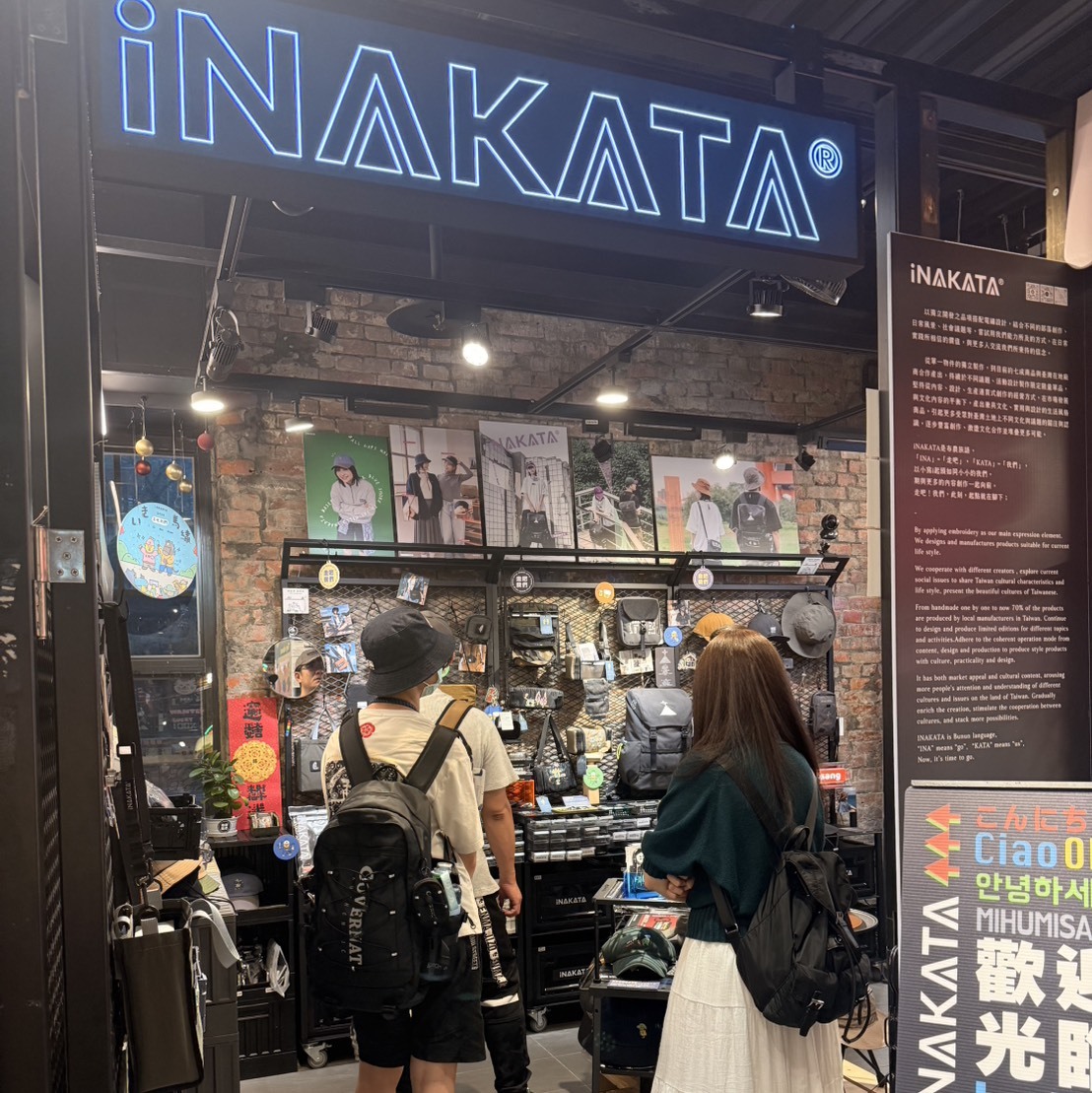
The name iNAKATA comes from the Bunun language: “I NA” means “let’s go,” and “KATA” means “we/us.” The brand draws deeply from Taiwan Indigenous community culture, transforming memories, natural landscapes, and lived experience into design inspiration. For anyone interested in how Taiwan’s Indigenous cultures enters contemporary design, it offers a perspective very different from standard tourist merchandise.
Café Dalida | A tropical-garden bar beside the Red House
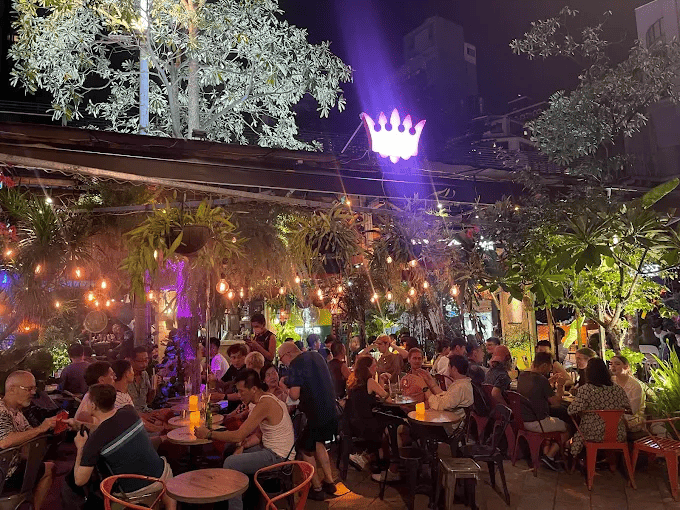
Café Dalida works well as the first stop of the evening. It sits close to Red House South Square and feels more open-air than a typical indoor bar, making it an easy place to sit down for a drink after exploring the Red House during the day. It was also one of Taipei’s earlier bars to promote drag queen performance culture, reflecting the free and diverse nightlife around South Square. Regular in-house performances were once stopped because of noise issues, while Café Dalida’s party brand C.U.M. Party also stages drag shows at other venues. Do not assume there will be a show when you visit; check the latest announcements from Café Dalida and C.U.M. Party.
Source: Café Dalida Google Maps business-provided photo
Echo Chamber Club 同溫層 - 無心戒酒互助會 | A multi-level cocktail bar in the “Little Hong Kong” lanes
Echo Chamber Club 同溫層 is better suited to visitors who have already explored Red House South Square and want a second stop deeper in the lanes. Its appeal is not a tourist atmosphere, but a multi-level cocktail space tucked into Ximending, ideal for continuing the night with friends. It is hidden in an area locals sometimes call “Little Hong Kong,” and its design-conscious, refined cocktails set it apart from louder mainstream bars. Without someone pointing the way, many visitors would never wander into this lane—which is exactly what gives it its local, hidden-away feel.
LAU TUNG (劉湯包) | Freshly steamed dumplings on Neijiang Street
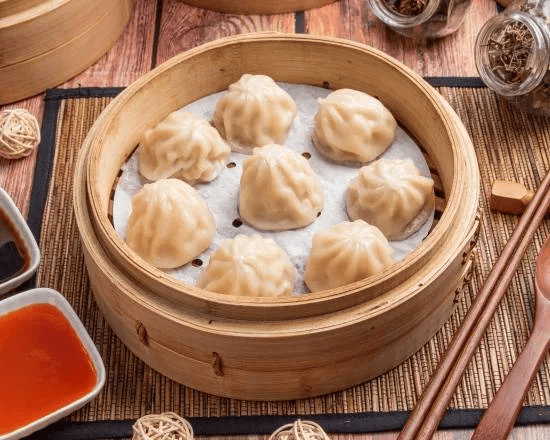
Walk behind the Red House toward Neijiang Street and it is easy to miss LAU TUNG (劉湯包). The shop is small and runs at the pace of a one-person operation, with dishes steamed to order. First-timers can try the scallion pork soup dumplings. It does not have the presentation of a famous tourist restaurant, but it feels much closer to the kind of everyday lunch or dinner locals actually eat. Fresh steaming takes about five minutes.
Source: LAU TUNG (劉湯包) Google Maps business-provided photo
Chi Ou Doufu (吃ㄡˇ豆腐) | Stinky tofu with a distinctive chive sauce
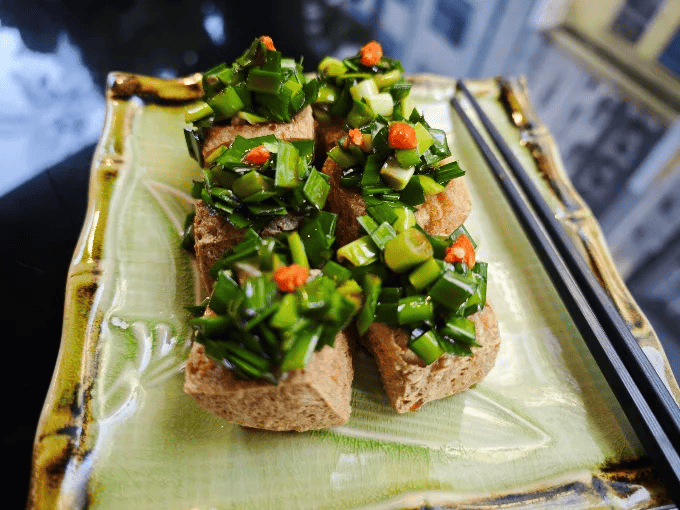
Chi Ou Doufu (吃ㄡˇ豆腐) on Neijiang Street is a good stinky-tofu option for a Ximending late-night food route. The tofu is fried until lightly crisp on the outside, while the porous interior absorbs the sauce. Its signature chive-sauce stinky tofu adds another layer of garlicky, herbal aroma. Fans of stinky tofu can make it a dedicated stop; first-timers may prefer sharing a portion with friends.
Source: Chi Ou Doufu (吃ㄡˇ豆腐) Google Maps business-provided photo
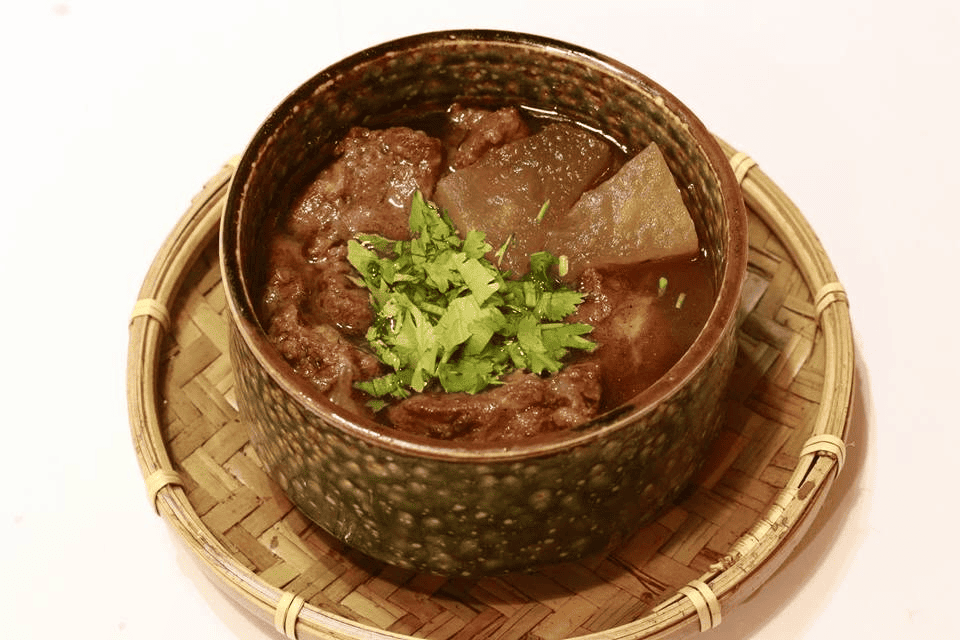
Hejia Paigusu (何家排骨酥) is a good choice if you want traditional Taiwanese comfort food. The pork ribs are first fried for aroma and then simmered in soup, often with winter melon. We would order the “pork-rib soup + tongzai migao (筒仔米糕)” combination. Tongzai migao (筒仔米糕) is glutinous rice steamed in a small cylindrical mold, turned out onto the plate, and topped with sauce. Together, the two dishes make a classic Wanhua-style meal.
Source: Hejia Paigusu (何家排骨酥) official Facebook page
Monga Luwei (艋舺滷味) | Afternoon cold luwei, until sold out
In Taiwan, luwei does not always have to be served hot. Cold-braised shops such as Monga Luwei (艋舺滷味) first simmer ingredients such as tofu, kelp, fried tofu, rice blood cake, and pork head until flavorful, then let them cool before slicing your selections to order. Without a hot broth, the soy-braised aroma and the texture of each ingredient stand out more clearly. If you have never tried it, think of it as a very Taiwanese soy-braised deli platter.
Monga Luwei (艋舺滷味) is one of our favorite local Wanhua picks. It is not an all-day tourist snack shop: it usually opens in the afternoon, has regular weekly days off, and popular items may sell out early. If something looks good, buy it when you see it rather than planning to return at night, and check the day’s latest business notice before going.
The basement of Wannian Commercial Building is more than a “cheap food court”; it has long been part of the everyday dining list shared among people who work around Ximending. It suits anyone who wants an inexpensive meal with the feel of an old local restaurant. Dian Xiao Er (店小二) is memorable for its freshly pan-fried chive potstickers, crisp on the bottom and generously filled. Before delivery apps became common, many businesses around Ximending simply phoned in orders—one of those local workday meals we learned about from years of working in the neighborhood. Huo Shui Pingjia Tieban Shao (活水平價鐵板燒) preserves the flavor of old-school Taiwanese teppanyaki: meat, bean sprouts, and cabbage are stir-fried in front of you; the cabbage often carries plenty of garlic and butter, with black pepper, rice, and soup on the side. Neither place is glamorous, but both are quick, filling, and full of old Ximending everyday character.
Wangjiao Mini Shitou Huoguo (旺角迷你石頭火鍋) | Individual stone hotpot from Sanchong to Ximending
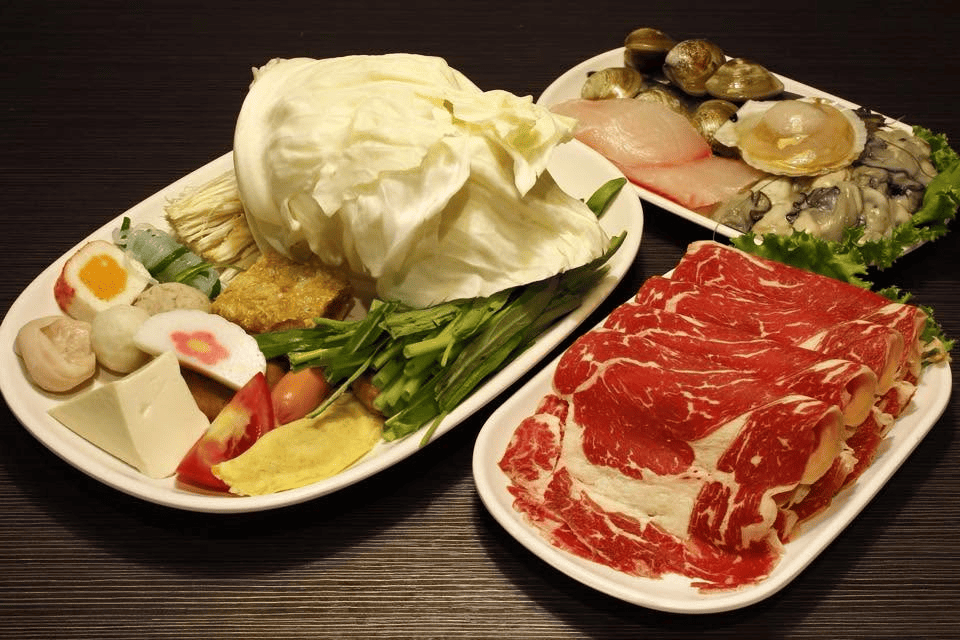
Wangjiao expanded from Sanchong to Ximending and adapted traditional Taiwanese stone hotpot into convenient individual pots. The key is “stir-fry first, then add broth”: onion, garlic, and other aromatics are fried in oil, the meat is cooked to around 60–70%, and seasoning plus broth is added so the browned meat juices become part of the soup base. Taiwan’s stone-hotpot lineage can be traced to Korean-style restaurants in Taipei in the 1960s. The concept of heavy pots and tableside stir-frying was later combined with Taiwanese flavors such as shacha sauce, dried flatfish, and dried squid, gradually becoming the style familiar today. Modern versions often use thick black heat-retaining or cast-iron pots, not necessarily pots made of actual stone.
Source: Wangjiao Mini Shitou Huoguo (旺角迷你石頭火鍋) official Facebook page
Yaxiang Shitou Huoguo (雅香石頭火鍋) | Color-coded self-service stone hotpot since 1976
Yaxiang opened in Ximending in 1976 and remains one of the places where you can still experience this part of Taipei’s food history. By the 1970s, Ximending stone hotpot had developed a self-service system where diners selected plates and paid according to plate color, becoming a shared memory for many longtime Taipei residents. Different old restaurants have their own stories; Yaxiang is among the earliest surviving representatives in Ximending. Ingredients are priced by colored plate, diners choose them themselves, and the bill is calculated from the plates at the end. Compared with Wangjiao’s individual pots, Yaxiang is better for a group sharing one pot.
Five local stops beyond the Red House: add these if you want to explore deeper
If this is not your first time in Ximending, or if you want to extend the route from the Red House into Wanhua, add the following five stops as your energy allows. They are not necessarily essential on a first trip to Taipei, but they take you beyond the sightseeing route and into everyday life around Ximending and Wanhua.
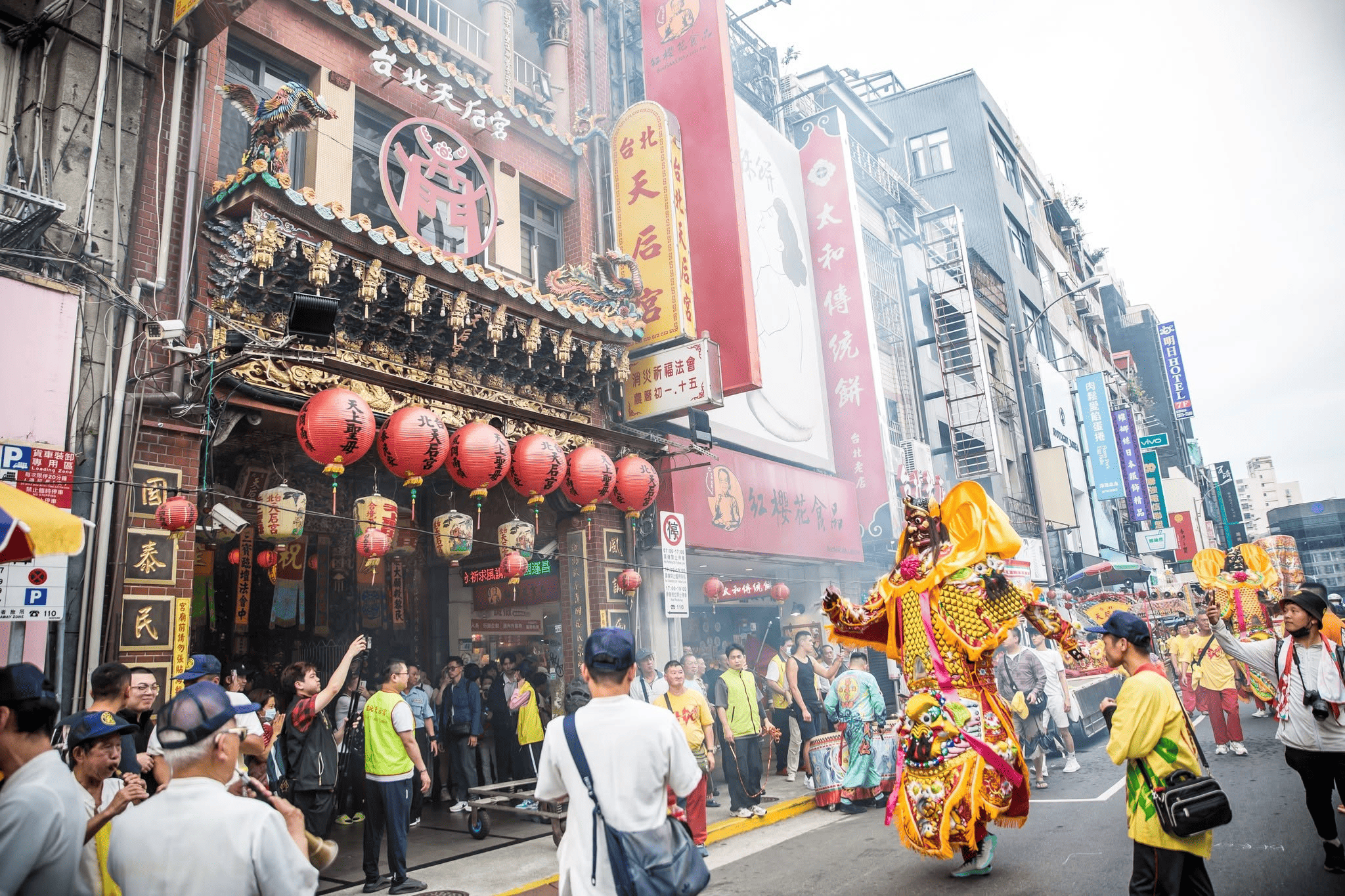
Taipei Tianhou Temple | Mazu worship in the middle of busy Ximending
Taipei Tianhou Temple is tucked between shop signs on Chengdu Road, yet it connects to a deep history of migration and folk religion in Taiwan. Mazu began as a guardian deity for seafarers. Early migrants crossing the Taiwan Strait—once called the “Black Ditch”—prayed for safe passage, and after settlement Mazu gradually became an important protector of families, communities, and everyday life. The temple traces its origins to Xinxing Temple in Monga, founded in 1746, and during the Qing period it served as an official Mazu temple of Tamsui County. The old temple was demolished in 1943 and moved in 1948 to the former site of the Japanese Shingon Buddhist Kōbō Temple in Ximending, leaving the unusual history of Mazu and Kōbō Daishi being worshipped within the same complex. Facing the temple entrance from outside, the side hall on your left—the traditional “tiger side”—enshrines the Earth God, with the Tiger Lord beneath the altar. In Taiwanese folk belief, the saying “Tiger Lord bites money in” reflects the hope that small amounts of money can grow and business can prosper. Some worshippers follow temple practice to receive a lucky coin and keep it in a wallet or shop. This small detail beneath the altar shows how Taiwanese folk belief flows naturally into everyday life.
Source: Taipei Tianhou Temple official Facebook page
Ximen Miandian (西門麵店) | Old-school diner for pork knuckle rice, cold noodles, and heibaiqie
Ximen Miandian (西門麵店) is known for rich pork-knuckle rice and very crisp cold noodles with lemon aroma and spicy dried radish, along with a counter full of braised side dishes and freshly sliced plates. Taiwanese people often call this style of choose-and-slice side dishes heibaiqie (黑白切). It does not mean black-and-white food: tofu, kelp, pig ear, intestines, and other pre-braised or cooked ingredients are sliced to order according to what the customer chooses. First-timers can start with pork-knuckle rice or cold noodles and add one or two side dishes for a meal closer to an everyday Taiwanese dining style.
Yongfu Yuwan Dian (永富魚丸店) | Handmade Fuzhou fish balls with meat filling
Yongfu Yuwan Dian (永富魚丸店) fits naturally into a Bopiliao or Longshan Temple route. Fuzhou fish balls differ from ordinary solid fish balls: the elastic fish-paste shell surrounds a meat filling, so each bite combines fish flavor with meat juices. The filling can be very hot when freshly served, so take a small bite from the edge first to avoid getting burned by the hot liquid inside.
Ah Cai Shi Mu Yu Du (阿財虱目魚肚) | A Ximending late-night milkfish shop that opens after dark
The appeal of Ah Cai is less about its queue-famous reputation and more about the late-night rhythm of Ximending. The milkfish belly is cleanly prepared and tender, while the rich braised pork rice and thick scallion omelet are also worth ordering. At busy times, waits can reach 40–50 minutes, and prices are not especially low. The best approach is to check after a late movie or drinks: sit down if the line is short, and save it for another time if it stretches too far. A single late-night meal is not worth sacrificing your whole evening itinerary.
Haiweifeng Haichan Dian (海味豐海產店) | A local Taiwanese rechao spot known for pan-fried pork liver
Haiweifeng Haichan Dian (海味豐海產店) is not the kind of place international visitors are likely to find on their first Ximending search; it feels more like somewhere Taiwanese friends would choose for a group dinner. Rechao dining means ordering several meat, seafood, vegetable, and fried-rice dishes for the table, usually with rice or beer. From our years of working and eating around Ximending, Haiweifeng is one of the places we would take friends when we want direct flavors, shareable dishes, and relatively reasonable prices. The pan-fried pork liver is especially memorable: lightly seared on the outside, still tender inside, and coated in a sweet-savory sauce that goes well with rice. Dinner can get busy, so check reservation options before going.
Ximending clothing guide: why TAIWANIZE is worth a stop
Search for “must-visit clothing stores in Ximending” and you will usually find streetwear, sneaker shops, budget fashion, and Korean-style boutiques. TAIWANIZE is different because it combines Taiwanese culture and everyday references with contemporary apparel design, allowing Taiwanese symbols to move beyond travel souvenirs and into daily outfits. For people who like designer clothing, distinctive styling, or fashion inspired by Taiwan, it is one of Ximending’s more recognizable choices.
TAIWANIZE Red House store: Taiwanese culture translated into clothing
According to the TAIWANIZE website, the brand was founded in Taipei in 2012 and draws on Taiwanese culture and everyday life to design T-shirts, apparel, underwear, and accessories. That positioning fits the Red House creative district naturally: see the historic building and creative shops first, then visit TAIWANIZE for Taiwanese design you can actually wear on the street.
TAIWANIZE store information lists the Red House location inside the Red House 16 Workshops, at 1F, No. 177, Xining South Road, Wanhua District, Taipei.
TAIWANIZE store information lists Monday as the regular closing day. Other opening hours may change with Red House venue arrangements, so check the official store page before visiting. Store phone: (02) 2361-8036.
More wearable than a typical souvenir: T-shirts, jackets, hats, and accessories
TAIWANIZE’s online categories include menswear, womenswear, T-shirts, sweatshirts/jackets, long pants, shorts, accessories, underwear, and a Basics line of plain T-shirts. Newer products also feature motifs such as guardian lions, traditional wave patterns, xiaolongbao, bubble tea, shaved ice, and the Red House. These Taiwanese elements are worked into clothing and accessories not as one-time travel souvenirs, but as cultural imagery that can become part of everyday dressing.
Who is it for? International visitors, Taiwan gift shoppers, and people who like distinctive style
TAIWANIZE suits people who enjoy designer clothing, distinctive styling, graphic T-shirts, embroidery, and cultural references, as well as both travelers and local shoppers who are especially interested in Taiwan-inspired design. It is also a good option if you are looking for a Taiwan gift for an overseas friend or a piece from your trip that carries Taiwanese memories but remains easy to wear at home. If all you want is the cheapest basic item, Ximending has many more choices; but if you care about the design language of the clothing itself and want your outfits to connect with Taiwanese culture, TAIWANIZE stands out much more clearly.
How is TAIWANIZE different from a typical Ximending clothing store?
Comparison
Design focus
TAIWANIZE
Taiwanese cultural motifs and contemporary apparel design
Builds a recognizable design language through Taiwanese elements
Typical Ximending clothing store
Varies by store positioning and seasonal trends
Comparison
Recommended for
TAIWANIZE
Designer-fashion fans, distinctive dressers, and people looking for practical Taiwan gifts
Typical Ximending clothing store
People who want to find current fashion quickly
What to do at the Red House at night: South Square bars and Ximending nightlife
One of the most interesting things about the Red House at night is the shift from daytime heritage-and-design atmosphere to a more relaxed open-air bar scene. For travelers, it works well as the final stop of a Taipei day: explore history in daylight, stay for a drink after dark, then walk back to the MRT.
Heritage and creative shopping by day, open-air bars by night
Taiwan tourism information notes that the Red House area includes open-air cafés and bars around South Square, together with the North Square creative market and the 16 Workshops. In practical itinerary terms, treat South Square as a place to relax at night rather than forcing it into your daytime sightseeing schedule.
Red House South Square bar street: drinks with friends and a look at Taipei after dark
The South Square bars are good for chatting and casual drinks with friends, and they also give international visitors an easy glimpse of Taipei nightlife. Think of the area as a relaxed city experience rather than a bar-hopping checklist. If you have already spent the day at Bopiliao or Dadaocheng, sitting down near the Red House in the evening is often more enjoyable than squeezing in another attraction.
After the Red House: how to continue into Ximending food and the cinema district
Step outside the Red House and you are already in the Ximending commercial district. You can have dinner in the pedestrian zone and return to South Square for a drink, or photograph the Red House at night before going to a movie. The advantage is that you do not need another ride, which makes this route especially comfortable for first-time Taipei visitors who do not want to worry about getting lost.
One-day heritage route through western Taipei: Red House, Bopiliao, and Dadaocheng
If you do not want to stop at the Red House, extend the day into a heritage route through western Taipei. The Red House, Bopiliao, and Dadaocheng show three different faces of old Taipei: Ximending mixes entertainment and creative culture, Bopiliao preserves old Wanhua streets and houses, while Dadaocheng is known for dry goods, tea, textiles, and historic commercial architecture.
Easy half-day route: Red House, Bopiliao, and the Longshan Temple area
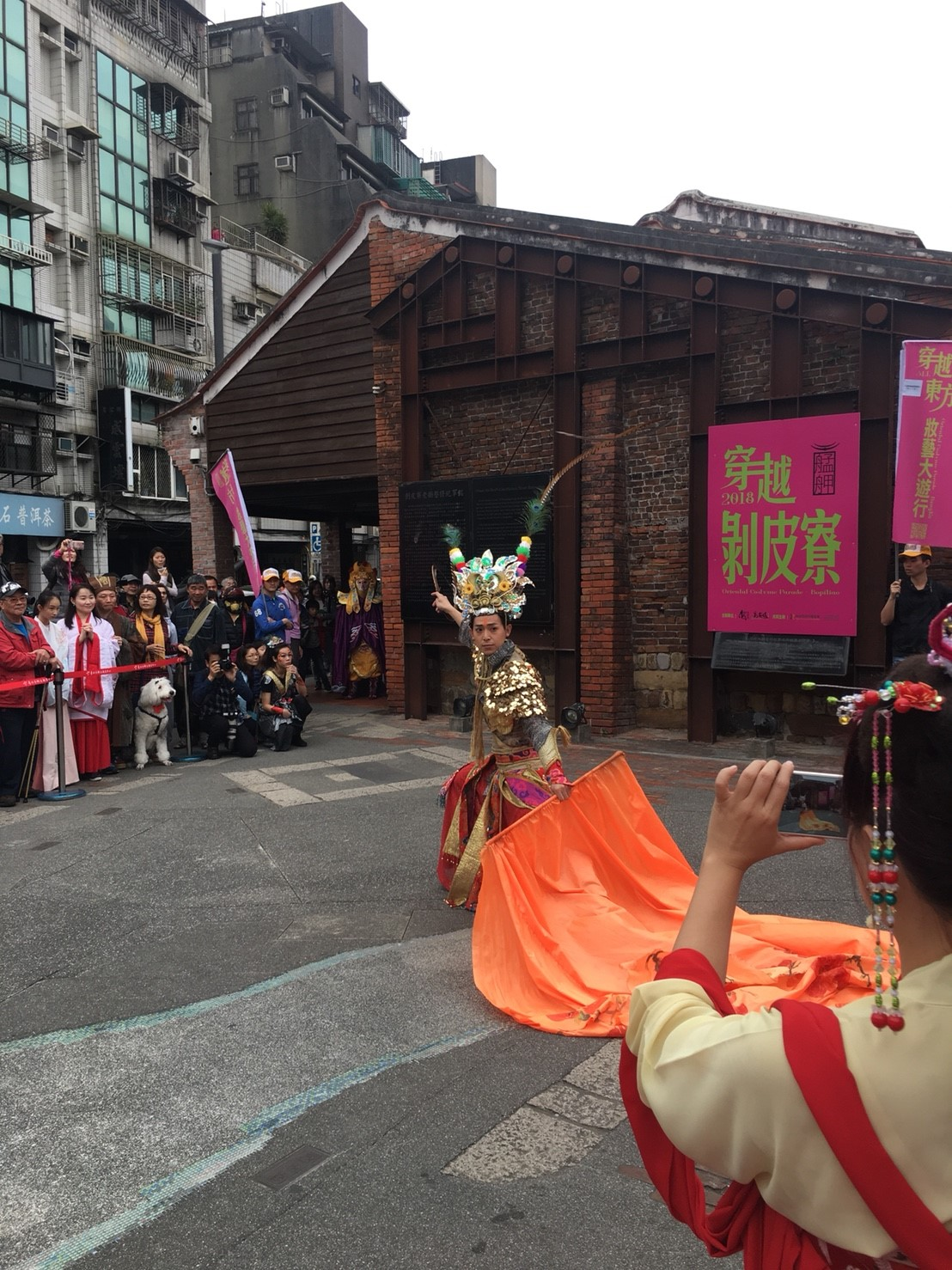
Official Bopiliao information lists Monday as the regular closure day. From Tuesday through Sunday, the historic street area is open 9:00–21:00, exhibition rooms are open 9:00–18:00, and admission to the entire district is free. Bopiliao is on Lane 173, Kangding Road, Wanhua District, and you can reach it from the Red House on foot or by a short ride.
A relaxed half-day route is to visit the Red House in the morning or afternoon, continue to Bopiliao for old street-house photos, and finish around Longshan Temple with local snacks. The stops are relatively concentrated, making this a good first cultural walk through Wanhua.
Full-day route: Red House, Bopiliao, and Dihua Street in Dadaocheng
Taipei Travel describes Dadaocheng as a former hub for north-south trade and one of old Taipei’s political and economic centers. It remains a good place to shop for dried foods, tea, and textiles, while the district preserves red-brick Western-style houses and other traces of historic Taipei.
A full-day version could look like this: brunch or shopping around the Red House, old streets and exhibitions at Bopiliao, then Dihua Street in Dadaocheng for tea, dry goods, textiles, or sweets. Return to Ximending for dinner or a drink at Red House South Square in the evening. The route is complete but spread out, so use the MRT or a taxi for the longer connections rather than treating every section as a walk.
Traveler route: Taiwanese designer fashion, old streets, tea houses, and evening bars
If you are showing Taipei to an international friend, make the theme “Taiwanese design and old Taipei.” Visit the Red House and TAIWANIZE in the morning, Bopiliao and Dadaocheng in the afternoon, then return to Ximending at night. This lets visitors see heritage, neighborhoods, fashion design, traditional commerce, and nightlife in one day instead of experiencing Taipei only through photo spots.
Getting around: when to walk, take the MRT, or use a taxi
Route
Red House → Bopiliao
Recommended transport
Walk or take a short ride
Best situation
When you want to see Wanhua streets along the way
Route
Bopiliao → Dadaocheng
Recommended transport
MRT or taxi
Best situation
To save time and energy
Route
Dadaocheng → Ximending
Recommended transport
MRT or taxi
Best situation
For dinner back in Ximending
Red House visitor information: opening hours, transport, and things to know
Opening and event hours at the Red House vary by venue, shop, performance, and market. This guide summarizes publicly available official information, but you should still check the Red House website and individual business pages before visiting, especially for Monday closures, public holidays, and event periods.
Red House opening hours and Monday closure reminder
Opening hours can differ among Red House buildings, shops, performances, and markets, and may also change on public holidays or during special events. To confirm the main building, the 16 Workshops, or a specific event on the day you visit, check the latest Red House website and individual business announcements rather than relying only on old opening hours quoted in articles.
The MRT is easiest; driving and parking should not be your first choice
Central Ximending is crowded with both people and traffic. Unless you are traveling with an elderly family member or a lot of luggage, the MRT is usually easier than driving. Taiwan tourism information lists parking and visitor-service facilities nearby, but for most travelers Ximen MRT Station remains the most straightforward way to arrive.
When is the best time to go? Weekend markets, evening bars, and crowds
For quieter photos, choose a weekday afternoon. For the market, go on a weekend during the day. For the South Square bar atmosphere, choose Friday or Saturday night. There is no single “best” time—the important thing is deciding whether you want photos, shopping, events, or nightlife.
Red House FAQ
Do you need a ticket for the Red House?
General admission to the Red House is free. Specific performances, theater programs, workshops, or events may charge admission depending on the organizer. Check the official Red House event page before visiting.
Which Red House shops are worth visiting?
On a first visit, start with the Red House Select Shop, the 16 Workshops, and the weekend creative market. Inside the 16 Workshops you can see several approaches to Taiwanese design: TAIWANIZE brings Taiwanese cultural motifs into contemporary apparel, Littdlework 繡珍森活 uses embroidery to depict everyday Taiwan, iNAKATA develops design from Taiwan’s Indigenous cultures and natural landscapes, and Kanghe Jiujian Jinyifang (康和九間錦衣坊) transforms traditional Chinese clothing elements into contemporary dress. Leave enough time to browse rather than focusing on only one shop.
What souvenirs are good to buy at the Red House?
The Red House offers Taiwanese creative goods, handmade accessories, illustration items, lifestyle objects, and designer fashion. The 16 Workshops also show different directions in Taiwanese design: Littdlework 繡珍森活 creates embroidered goods from everyday Taiwanese imagery, iNAKATA develops products from Indigenous culture and natural landscapes, Kanghe Jiujian Jinyifang (康和九間錦衣坊) extends traditional Chinese clothing into modern outfits, and TAIWANIZE incorporates Taiwanese cultural motifs into contemporary apparel. If you want a Taiwan gift that is genuinely usable after the trip, choose according to whether you prefer embroidery, cultural design, or clothing.
Which clothing store should I visit in Ximending?
If you want a clothing store with a distinct Taiwanese design identity around Ximending or the Red House, TAIWANIZE is a strong first stop. The brand draws on Taiwanese culture and everyday imagery for T-shirts, jackets, underwear, and accessories. The focus is not generic tourist merchandise but Taiwanese designer fashion that can fit naturally into everyday outfits. If you prefer Tang-style garments, tea-wear, and Eastern silhouettes, you can also look at Kanghe Jiujian Jinyifang (康和九間錦衣坊) in the same 16 Workshops area.
Where is the TAIWANIZE Red House store?
The TAIWANIZE Red House store is at 1F, No. 177, Xining South Road, Wanhua District, Taipei, inside the Red House 16 Workshops. The official website lists the phone number as (02) 2361-8036 and Monday as the regular closing day.
What can you do at the Red House at night?
At night, you can visit the South Square bars, have dinner in Ximending, walk through the cinema district, or stroll the pedestrian area. If you have already explored the creative shops during the day, staying for a drink gives the Red House a more complete day-to-night experience than simply taking night photos.
Is the Red House good for international visitors?
Yes. The Red House is easy to reach and combines heritage, creative goods, Taiwanese designer fashion, food, and nightlife, giving international visitors a more distinctive Taipei experience than shopping alone.
Can you visit the Red House, Bopiliao, and Dadaocheng in one day?
Yes, but do not try to walk the entire route. The smoothest plan is to group the Red House and Bopiliao together, use the MRT or a taxi from Bopiliao to Dadaocheng, then return to Ximending for dinner or drinks in the evening.
When does the Red House weekend market take place?
Taipei City cultural information says the Red House creative market continues to run on Saturdays and Sundays in North Square. Market size, vendors, and special events can change, so check the Red House website or social media before going.
Where can I check current Red House events?
For current Red House events, check the official “Latest Events” page and rely on the notices visible on the day you travel. If another blog mentions an event, confirm that its date has not already passed.
Why the Red House is worth visiting: it brings western Taipei together in one place
What makes the Red House worth recommending is not simply that it is famous, but that it can connect an entire walk through western Taipei. By day, see the red-brick heritage building, browse Red House Select Shop and the 16 Workshops, and stop by TAIWANIZE for designer fashion that brings Taiwanese culture into everyday outfits. At night, stay around South Square or Ximending and experience a more relaxed, street-level side of Taipei.
If you stay only 30 minutes, the Red House is little more than a photo stop. Give it two to three hours, and it becomes a mixed district of heritage, creative goods, fashion, food, and bars. Next time you are in Ximending, do not just walk past the entrance—go inside and browse. You will understand a little better why Taipei is such an interesting city.